
Rakotzbrücke Arch Bridge
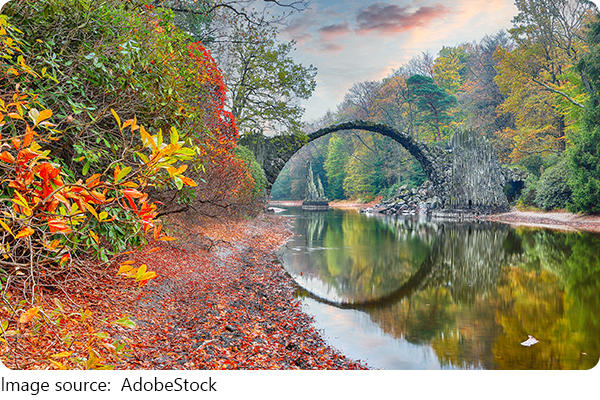
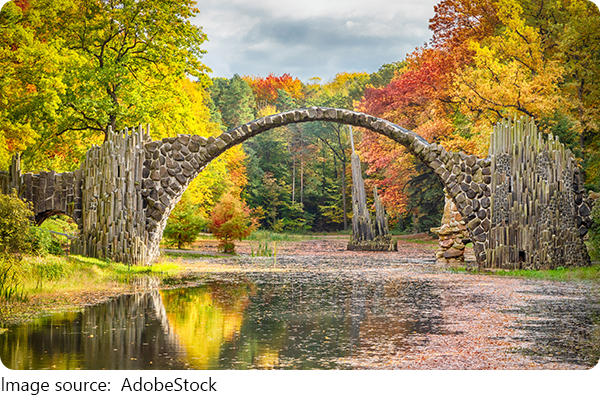
The first time you see Rakotzbrücke, you probably stop walking without meaning to. The bridge doesn't look real at first glance. Its curved stone arch stretches perfectly across still water, forming a near-complete circle when reflected. People around you lower their voices, not because anyone told them to, but because the place quietly asks for it.
Rakotzbrücke, often called the Devil's Bridge, sits inside Kromlau Park in eastern Germany. It's not a large attraction, and you won't find ticket booths or long walking routes. What draws people here is a single moment: standing at the right angle and realizing the scene looks exactly like something from a storybook. But seeing it well takes a little planning.
Related
 Why Seeing Paris From Above Changes Everything You Think You Know!
 A dramatic Arctic escape where mountains, fishing villages, and changing light turn every moment into a postcard come to life.
 This Tiny German Town Has Europe’s Industrial “First”—And Almost Nobody Talks About It
 Forget the Tour de France. The Real Adventure is Hiking a Trail So Remote It Feels Like Another Planet!
 Ho Chi Minh City Travel Guide: Exact Prices for Tickets, Transport, Hotels, Food & Smart Tips for First-Time Visitors!
 Affordable museums, lakeside downtime, and an epic air show—Radom rewards curious travelers without draining the wallet.
What makes Rakotzbrücke special?
The bridge was built in the 19th century using dark basalt stones, carefully shaped to form a smooth arch. Unlike larger stone bridges designed for traffic, Rakotzbrücke was built purely for appearance. It was never meant to be crossed.
What makes it remarkable is precision. The curve of the arch almost completes a perfect circle when reflected in the water below. On calm days, the reflection is clear enough that it's hard to tell where stone ends and water begins. Surrounding trees frame the bridge naturally, especially during warmer months.
Best time to visit for the reflection
The reflection is the reason people come, so timing matters more than distance.
1. Early morning is ideal
Arrive between 7:00 and 9:00 a.m. if possible. Wind is minimal, and the water stays smooth. You'll also avoid most visitors.
2. Late spring to early autumn works best
From May to September, trees are full and the colors feel balanced. Autumn adds warm tones, but falling leaves can disturb the water surface.
3. Avoid windy afternoons
Even light wind breaks the reflection. If the water ripples, the illusion disappears.
How to get there without stress?
Rakotzbrücke is located in Kromlau Rhododendron Park, near the town of Gablenz.
• By car
This is the easiest option. Parking is available near the park entrance and usually costs around $3–5 USD for a few hours.
• By public transport
Take a train to Weißwasser or Muskau, then a local bus or taxi to Kromlau. Expect the last leg to be slower, and check return times in advance. Total cost is usually under $10 USD one way.
Once inside the park, the walk to the bridge takes about 10 minutes on flat paths.
Opening hours and entry costs
Kromlau Park is open daily, generally from sunrise to sunset. There's no ticket required to enter the park or view the bridge. Seasonal events may adjust access slightly, but Rakotzbrücke itself remains viewable year-round.
Important rules visitors often miss
One of the most common mistakes is trying to cross the bridge. It's strictly prohibited. The structure is old, and walking on it can cause damage.
Stick to marked paths and viewing areas. The best photos are taken from ground level near the water, not from climbing or stepping closer to the arch.
How to experience it beyond photos?
Most visitors spend less than 15 minutes here. That's enough for a picture, but not enough to understand why the place feels special.
Try slowing down:
1. Walk around the pond and notice how the reflection changes
2. Sit on a nearby bench and watch how light shifts across the stone
3. Look at the smaller rock formations and plants around the bridge
The bridge was designed to be part of the landscape, not the only thing in it.
Local tips that make a difference
• Visit on a weekday if possible
• After rain, wait for the water to settle before taking photos
• Bring comfortable shoes, paths can be damp in the morning
Photography enthusiasts often bring tripods, but handheld shots work well when the light is soft.
Why Rakotzbrücke stays with people?
Rakotzbrücke doesn't impress through size or scale. It impresses through balance. Everything feels intentional, from the arch's curve to the quiet space around it. There's no rush here, no list of things to do. Just a single view that asks you to notice it properly.
Before you leave, take one last look without lifting your phone. Watch how the reflection holds, then breaks, then reforms. It's a reminder that some places aren't about collecting images, but about learning how to pause.
If you're willing to arrive early, stand still, and let the scene settle, Rakotzbrücke gives you something rare: a moment that feels complete all on its own.