
A Cosmic Event Awaits!
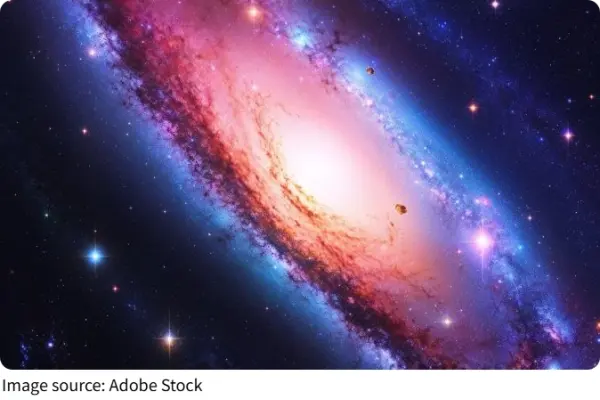
When planets appear to line up in the night sky, the sight is truly one of nature’s most enchanting spectacles.
These planetary alignments or “planet parades” occur when several planets in our solar system seem to gather along the same region of the sky as viewed from Earth.
While the planets never form a perfect straight line in three‑dimensional space, these events create striking arcs that intrigue astronomers and casual skywatchers alike. Such celestial gatherings offer both educational insight and aesthetic wonder, connecting observers to the vast mechanics of our solar neighborhood.
Prepare For A Large Planetary Alignment And Great Planetary Alignment!
World News Report Today
Celestial Mechanics Behind Planetary Alignments
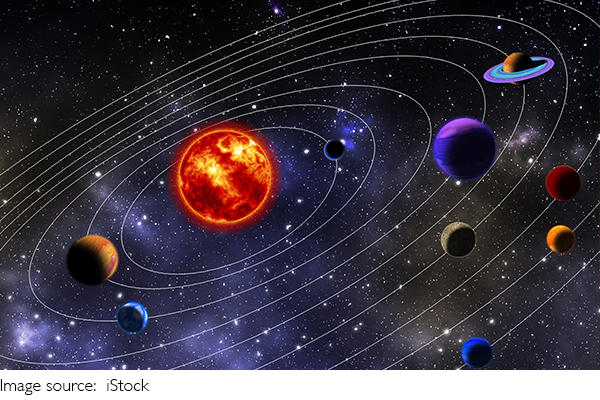
To understand why planets sometimes appear in sequence, it helps to look at how they move. All major planets in our solar system orbit the Sun roughly within the same flat plane, known as the ecliptic. When planets position themselves on the same side of the Sun from Earth’s vantage point, they trace a line or arc across the sky. This alignment is known as a conjunction in astronomy — not because the planets are physically close, but because their apparent positions align along the observer’s line of sight.
Related
 From fierce defenders to quiet protectors, ranked by zodiac sign.
 How renewable energy is driving next-gen hydrogen production.
 Discover how stars are born, live, and die, and what scientists are learning.
 Exploring the return of supersonic flight and the hurdles ahead.
 Essential tips to help beginners pick the perfect camera for their needs.
 Ever wondered how astronauts survive the harsh conditions of space?
The concept of alignment might sound dramatic, but it’s rooted in simple orbital motion. Each planet travels at its own pace — Mercury races around the Sun in about 88 days, while Neptune takes roughly 165 Earth years. These differing orbital speeds mean the planets’ relative positions shift constantly. Every so often, this motion causes several planets to cluster visually along the ecliptic, creating an alignment that can be seen after sunset or before sunrise depending on the event.
What You See in the Sky
A planetary alignment does not involve the planets touching or overlapping in space. Rather, from Earth, they appear to be arranged in a pattern that seems sequential or “lined up.” The alignment can include as few as three planets or, at its most striking, six or even seven worlds in the same stretch of sky. These gatherings are often referred to as a planet parade, because of their visual similarity to a procession across the heavens.
When planets align, the most visible ones such as Venus, Jupiter, and Saturn — often shine brightly enough to be spotted without optical aid. Fainter worlds like Uranus and Neptune might require binoculars or a modest telescope to become distinguishable from the background stars. The apparent positions of the planets form a gentle arc because the ecliptic is tilted relative to the horizon, especially shortly after sunset or before sunrise during an alignment event.
Why These Alignments Matter
From a scientific perspective, planetary alignments are not dramatic drivers of gravitational forces or cosmic upheaval — despite popular myths suggesting otherwise. The gravitational influence of distant planets on Earth is negligible, even during alignments, and there is no credible evidence that such events trigger earthquakes, tsunamis, or other geophysical disasters.
However, these alignments are meaningful for several reasons:
Historical astronomy: Observations of planetary positions have guided astronomers for centuries in refining models of orbital motion and improving our understanding of celestial mechanics.
Public engagement: Planetary parades offer accessible opportunities for education and stargazing, drawing people of all ages to explore the night sky.
Scientific observation: While not associated with dramatic physical effects, alignments can help amateur astronomers calibrate their equipment and practice sky mapping, contributing to broader observational knowledge.
The Rarity and Predictability of Alignments
Planetary alignments involving more than three or four visible planets are not everyday occurrences; they become rarer as more worlds participate in the same event. A six‑planet alignment, such as the one expected on February 28, 2026, where Mercury, Venus, Jupiter, Saturn, Uranus, and Neptune will be visible along the evening sky, offers a particularly captivating example. These alignments are predictable because planetary orbits are well‑understood — astronomers can calculate when and where planets will appear relative to Earth’s position well in advance.
Alignments including the outer planets like Uranus and Neptune are especially noteworthy because these worlds move slowly and are faint, requiring precise timing and often optical assistance for observation. In contrast, alignments of inner planets such as Mercury and Venus occur more frequently but are typically lower on the horizon and harder to see without clear viewing conditions.
How and When to Observe
To observe a planetary alignment, the location and timing of your observation matter. Most alignments are best viewed when the Sun is just below the horizon — shortly after sunset for evening alignments or just before sunrise for morning ones. A clear, unobstructed horizon enhances visibility, especially for planets near the Sun’s position. Using sky mapping tools or astronomy apps can help identify the correct portion of the sky where the planets will appear clustered.
Because these events unfold gradually, patience rewards observers with changing patterns as planets slowly shift night to night. Alignments do not remain static; the relative brightness and position of each planet evolve as Earth and other planets continue their orbits.
Cultural and Educational Impact
Planetary alignments have always stirred human imagination. Ancient civilizations often recorded the positions of planets against background stars not just for navigation, but also as part of early attempts to understand the universe’s structure. In contemporary times, these celestial gatherings continue to inspire curiosity, connecting people with the cosmos and fostering an interest in science, culture, and the natural world.
Although alignments offer no special physical effects on Earth, their psychological and educational value cannot be understated. They remind us of our place within a vast and dynamic solar system and encourage us to look up, wonder, and learn.