
Best Plants for Beginners
Starting with the wrong houseplant is the fastest way to get discouraged.
Some plants are genuinely demanding — they need specific light, precise watering intervals, exact humidity levels, and constant attention.
But plenty of others are the opposite: easy-going, forgiving of inconsistent care, and almost intent on staying alive despite whatever you put them through. The plants below are the ones that actually make sense for beginners.
Pothos — The Trailing, Forgiving Classic
Pothos (Epipremnum aureum) is the plant recommended to beginners more than almost any other, and for good reason. It trails beautifully from a bookcase, climbs an indoor trellis, or hangs in front of a shaded window. It tolerates low to moderate indirect light, which means it survives in rooms that other plants would struggle in. The care routine is straightforward: water thoroughly, then let the soil dry out somewhat before the next watering. If leaves start yellowing and dropping, it usually means more frequent watering is needed. If stems are getting long and sparse, trimming them back encourages the base to fill out. Golden pothos has striking yellow-and-green variegated leaves; Marble Queen is creamy white and green. Never let any houseplant — pothos included — sit in water in its saucer. Drain it within about 30 minutes of watering.
Related
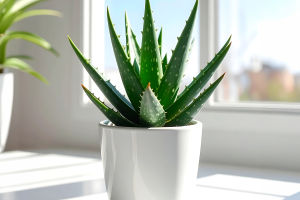 Most houseplants die from the same mistakes — here's what to actually do to keep them thriving indoors.
 Learn to Make a Smooth, Creamy Latte at Home in Minutes with Simple Steps
 What Tea Tools Are Really Needed? A Simple Guide to Every Essential Teaware Piece You Should Know Today!
 Simple expert tricks to keep your home spotless with less effort
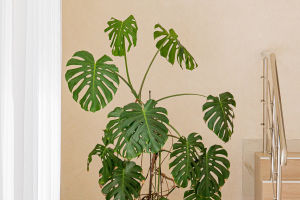 No Sunny Window? No Problem — Here's How to Keep Indoor Plants Genuinely Healthy in Dim Spaces
 Most people are storing fruits and veggies all wrong — and it's quietly draining your grocery budget every single week
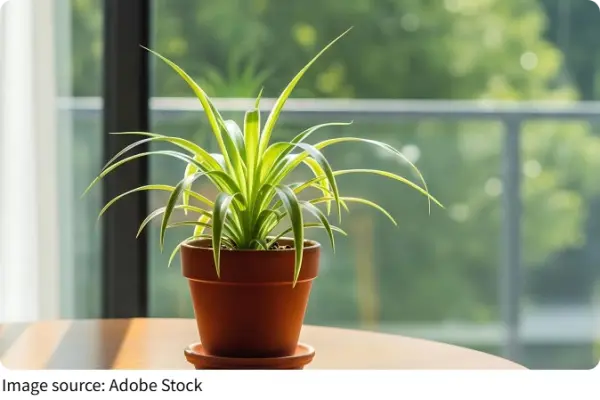
Spider Plant — Easygoing With a Bonus
The spider plant (Chlorophytum comosum) has been a staple houseplant for generations partly because it's so easy and partly because it propagates itself. Long arching leaves — bright green with white edges — produce dangling stems with small plantlets at the tips. These "spiderettes" can be left attached for a full trailing effect or removed, rooted in water, and potted up separately. Spider plant grows in bright indirect light but handles shadier spots without much complaint. Water thoroughly and let the top inch or so dry before watering again. If the leaf tips turn brown, low humidity is often the cause — try misting or grouping it with other plants to raise the moisture in the air around it.
ZZ Plant — Built for Neglect
The ZZ plant (Zamioculcas zamiifolia) is for anyone who travels frequently, has a busy schedule, or has previously struggled to keep plants alive. It's drought-tolerant and genuinely comfortable in low light, which makes it one of the most adaptable plants available. Glossy green leaves grow neatly in pairs along upright central stems. Water it thoroughly, then let the soil dry out almost completely before watering again. When in doubt, wait another few days — ZZ plants handle underwatering far better than overwatering. Soggy roots are the only real way to run into problems with this one.
Snake Plant — Practically Indestructible
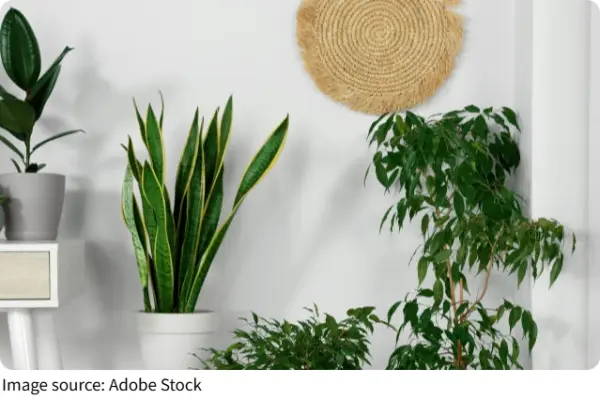
Snake plant (Dracaena trifasciata) grows in almost any environment: direct sunshine, bright indirect light, or even shady corners. It tolerates low humidity, prefers warm temperatures, and needs very infrequent watering — especially in winter, when once every month or two is often enough. Stiff, upright leaves banded with lighter green, cream, or silver give it a bold, architectural look that suits contemporary spaces well. The only reliable way to damage a snake plant is to overwater it consistently. Propagate it by division when it outgrows its container, and the patterned leaves will carry through in the new plants.
Ponytail Palm — Dramatic and Drought-Resistant
Despite the name, ponytail palm (Beaucarnea recurvata) is not a palm at all — it's a member of the Agave family, native to the dry desert of Mexico. The swollen base stores water, and long, strap-like leaves cascade from the top in a way that genuinely does resemble a ponytail. It wants direct or bright indirect light, very infrequent watering, and low humidity — exactly the conditions that most homes naturally provide. Larger, mature specimens make genuine statement pieces. Slow-growing but remarkably forgiving.
Peace Lily — For Low-Light Spaces With Some Humidity
The peace lily (Spathiphyllum) is one of the few flowering plants on this list, and it blooms in white even in relatively dim conditions. It prefers bright to medium indirect light but is one of the most light-tolerant flowering plants available. Keep the soil evenly moist and water when it starts to feel dry — peace lilies will wilt visibly when they need water but typically recover quickly after a thorough drink. They appreciate humidity, so kitchens and bathrooms suit them well. The weight test works nicely for peace lilies: lift the container right after watering and feel how heavy it is, then check every few days as it lightens to judge when it's time again.