
The Island That Floats
Twice a day, the sea decides whether you can leave. The tidal flats around Mont Saint-Michel fill and empty with some of the fastest-moving tides in Europe — at peak flow, the water rushes in at roughly the speed of a galloping horse, covering kilometers of sand in minutes.
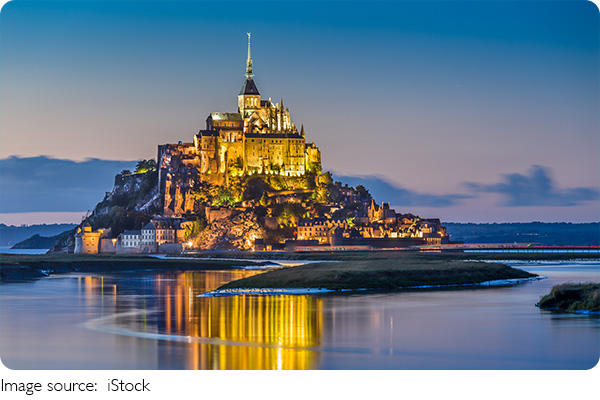
The medieval abbey sitting on top of the granite island doesn't care. It's been watching this happen for over a thousand years, its spire pointing straight up into the Norman sky, completely unbothered. That's the thing about Mont Saint-Michel — it operates on its own schedule, and you adjust to it, not the other way around.
What You're Actually Looking At?
Mont Saint-Michel is a tidal island off the coast of Normandy in northwestern France, connected to the mainland by a narrow causeway. The island rises about 92 meters from the bay, and the Benedictine abbey perched at its summit dates back to 708 AD, though most of what you see today was built between the 11th and 16th centuries. The lower parts of the island are packed with medieval streets, rampart walls, half-timbered houses, and small shops — it looks exactly like a film set, except it's been continuously inhabited for centuries. Around 50 people actually live on the island year-round, outnumbered on busy days by the three million tourists who visit annually.
Related
 Norway's Lofoten Islands in winter will break your heart — in the best possible way.
 High alpine lifts, glassy glaciers, designer viewpoints, and heritage thrills make St. Moritz easy, unforgettable escape year‑round.
 Bridges, castles, parks, and art—Ljubljana blends charm, design, and mellow rhythms into an easy city break.
 Wondering whether a hotel, rental, or hostel fits your next trip best?
 Discover the Shocking Truth About the Saltiest Lakes and Seas on Earth!
 A timeless masterpiece of architecture and history.
The Abbey Up Close
The abbey is the reason to climb. You enter through the West Terrace and work your way up through a series of Gothic halls, cloisters, and chapels that get progressively more dramatic the higher you go. The cloister at the top — a double row of slender columns surrounding a small garden — is one of the most elegant spaces in all of French medieval architecture. The view from the abbey walls over the bay is extraordinary, especially at high tide when the island is fully surrounded by water and the whole structure seems to float. Allow at least two hours inside; it's easy to spend three.
Getting There
Mont Saint-Michel is about 360 kilometers west of Paris. By car, the drive takes around 3.5 to 4 hours via the A11 and A84 motorways. By train, take a TGV from Paris Montparnasse to Rennes or Pontorson, then connect by shuttle bus to the island — total journey around 3.5 hours, costing $50–$80 round trip depending on booking timing. Free shuttle buses run from the mainland parking areas to the island entrance every few minutes throughout the day.
Mont Saint-Michel
Practical Info and Costs
• Abbey entrance fee: $13 per person, free for under 18s
• Abbey opening hours: daily 9am–7pm in peak season, 9:30am–6pm off-season
• Island access: free, open at all hours
• Mainland parking: $15–$18 per day
For accommodation:
• Guesthouse or B&B on the mainland near the causeway: $80–$120 per night
• Hotel inside the island walls: $180–$350 per night (book months ahead)
• Mid-range hotel in nearby Pontorson: $70–$110 per night
Staying on the island overnight is worth it if budget allows — after the day visitors leave, the atmosphere changes completely. The narrow streets go quiet, the lighting turns golden, and you have one of France's most iconic landmarks almost entirely to yourself.
Timing Your Visit Right
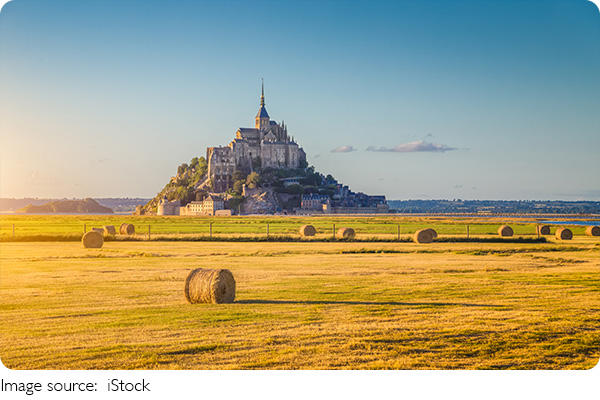
Check the tide tables before you go — the tourist office website publishes them and it takes two minutes. High tide completely surrounds the island and makes for the most dramatic photos, but it also means the causeway may be partially flooded. Low tide exposes the vast sandy bay, which you can walk across with a licensed guide — a completely different experience that reveals just how remote this place feels when the water pulls back. Either way, arrive early in the morning before the tour buses, or late afternoon when the crowds thin.
Mont Saint-Michel is one of those places that could easily disappoint — too famous, too visited, too built-up with souvenir shops. But climb to the abbey, look out over the bay at high tide, and it earns every bit of its reputation. There really is nothing else quite like it.