
Where the River Falls
Lykkers, deep inside Yellowstone in Wyoming, the Yellowstone River plunges 109 feet into a canyon colored in shades of yellow, orange, and cream.
The Upper Falls may be shorter than the Lower Falls, but what it lacks in height it compensates with raw power—a compact wall of white water you feel in your chest before you see it.
Brink of the Falls
The most thrilling viewpoint is the Brink of the Upper Falls trail on the north rim. This short, paved path covers just 0.3 miles round trip and leads directly to the cliff edge where the Yellowstone River tips over into open air. Standing there, the sound is enormous—a deep, constant roar accompanied by a fine mist that drifts across the viewing platform.
Related
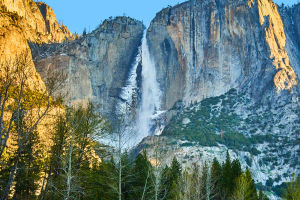 Yosemite Falls drops 2,425 feet in three stages—North America's tallest waterfall in a granite cathedral.
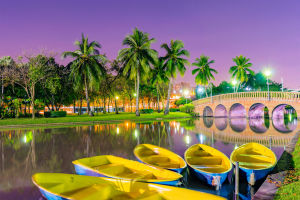 Bangkok hides lush parks, sky walks, and shaded retreats that feel worlds away from its buzzing streets.
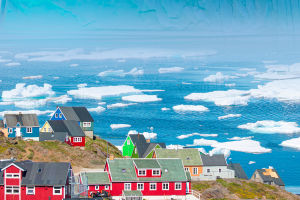 Tasiilaq clings to Greenland's eastern coast where icebergs drift, fjords glow, and the modern world fades.
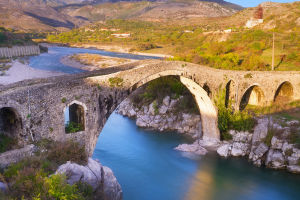 Mountains, lakes, stone bridges, and vivid culture—Shkodra packs big adventures into an easy, affordable base.
 Haida Gwaii's towering totem poles guard ancient stories on Canada's most remote and magical coast.
 Countryside escapes, Roman traces, cozy museums, and big-sky viewpoints—Arlon rewards unhurried travelers.
The trail is paved, family-friendly, and accessible to most fitness levels, though the railing at the edge and the sheer drop demand careful attention with children. There is no admission fee beyond the park entrance pass.
South Rim Views
On the opposite side of the canyon, the Upper Falls Viewpoint offers a classic frontal perspective of the waterfall framed by canyon walls and pine forest. The short, easy walk from the parking area takes just five to ten minutes.
Continuing along the South Rim Trail connects to additional overlooks—including the legendary Artist Point, which delivers one of the most photographed panoramas in the entire National Park system, with the Lower Falls and the golden canyon stretching into the distance. The South Rim Trail covers approximately 1.6 miles one way and remains relatively flat and well-maintained.
Park Entrance Fees
Yellowstone's standard vehicle pass costs $35, valid for seven consecutive days and covering all park entrances. The America the Beautiful Annual Pass at $80 covers every national park in the United States for 12 months—outstanding value for anyone visiting more than two parks per year.
Motorcycles enter for $30, and individual hikers or cyclists pay $20 per person. For international visitors, a non-resident surcharge of $100 per person applies in addition to the vehicle pass, though a $250 non-resident annual pass waives this surcharge entirely.
Canyon Village
The Canyon Village area, located within a short drive of both falls, serves as the most convenient base for exploration. Canyon Lodge and Cabins offer over 500 rooms ranging from modern lodge rooms with private bathrooms to more rustic cabin options.
Rates vary by season and room type, with summer peak pricing for lodge rooms typically ranging from $250 to $400 per night. Reservations open up to 13 months in advance through Yellowstone National Park Lodges and sell out rapidly for July and August dates—booking early is not optional, it is essential.
Camping Options
Budget travelers find excellent value in Yellowstone's campgrounds. Canyon Campground, managed by the park concessionaire, charges approximately $35 to $60 per night for tent and RV sites. National Park Service campgrounds elsewhere in the park—including Madison, Norris, and Slough Creek—cost $20 to $25 per night.
Fishing Bridge RV Park, the only full-hookup facility, runs $85 to $95 nightly. All campgrounds require advance reservations through Recreation.gov during peak season. Packing cooking gear and purchasing groceries at Hamilton Stores inside the park keeps daily food costs to roughly $15 to $25 per person, compared to $20 to $40 for park restaurant meals.
Yellowstone National Park
Best Time to Visit
The Canyon area opens for the season in late May and remains accessible through early November, weather permitting. Late May through June delivers the most spectacular waterfall volume, as snowmelt from Yellowstone's high-elevation backcountry swells the river dramatically.
July and August bring the warmest weather and heaviest crowds—arriving at trailheads before 8:00 AM or after 5:00 PM avoids the worst parking congestion. September offers a sweet spot of pleasant weather, thinning crowds, and golden autumn light that transforms the canyon's colors.
Getting There
Yellowstone has five entrances, with the closest major airports being Bozeman, Montana (90 miles from the north entrance) and Jackson Hole, Wyoming (60 miles from the south entrance). Round-trip flights from major cities to Bozeman typically cost $200 to $500. Car rental at regional airports runs $50 to $120 per day during summer.
Once inside the park, driving from the north entrance to Canyon Village takes approximately 80 minutes. The park's free shuttle system does not serve the Canyon area, so a personal vehicle is necessary. Fuel is available at several locations inside the park at prices typically $0.50 to $1.00 higher per gallon than surrounding towns.
Lykkers, there is something about watching a river simply refuse to stop—gathering momentum, reaching the edge, and committing to the fall with absolute certainty—that stays with you far longer than the spray on your face. The Upper Falls do not need to be the tallest waterfall in Yellowstone to be the most powerful moment of your visit. When was the last time you stood close enough to falling water that the sound drowned out every other thought?