
How Giraffes Got Long Necks
Hey, Lykkers! Have you ever looked at a giraffe and wondered how it ended up with a neck longer than many people are tall? That remarkable feature was not created overnight but developed through millions of years of evolution.
As forests changed into open grasslands, giraffes that could reach higher leaves often had a better chance of finding food. Over countless generations, this advantage helped shape the long-necked giants we know today.
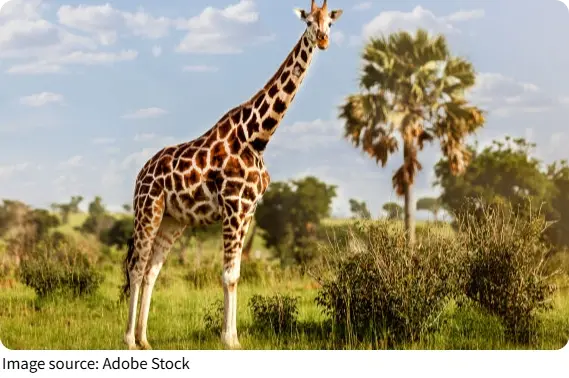
A Journey That Began Millions of Years Ago
The ancestors of modern giraffes looked very different from the giants that roam African savannas today. Fossil evidence from species such as Samotherium, which lived around seven million years ago, reveals animals with considerably shorter necks.
Related
 Massive horns, expert climbing skills, and survival in extreme mountain environments
 Tiny jungle acrobats or secret masterminds? The answer may surprise you!
 Rare genes or hidden risk? The truth may surprise you!
 They live underground—but their social lives might surprise you!
 Is a natural compass helping foxes hunt? Scientists uncovered a remarkable clue!
 These bold patterns aren't random—but what purpose do they serve?
As ancient forests gradually gave way to open grasslands and scattered woodlands, individuals that could browse slightly higher branches gained an advantage. Better access to food meant improved survival during dry seasons, increasing the likelihood of producing offspring.
Over countless generations, these small advantages accumulated, eventually creating the remarkably long neck seen in modern giraffes. Rather than evolving for appearance, this feature developed because it improved the odds of survival in a changing environment.
Reaching Food That Others Cannot
The most widely accepted explanation for the giraffe’s neck is simple: it allows access to food unavailable to most other herbivores. Acacia and other tall trees produce leaves rich in nutrients, especially during periods when lower vegetation becomes scarce.
While animals such as zebras, antelopes, and wildebeests feed closer to the ground, giraffes can stretch several meters upward to harvest fresh foliage. Field observations have shown that giraffes often spend much of their feeding time well above the browsing height of neighboring animals.
Their long, muscular tongues, which can extend around 45 centimeters, work together with flexible lips to pluck leaves from branches while avoiding many of the tree’s sharp thorns. This unique feeding strategy reduces direct competition and helps giraffes survive in habitats where resources can become limited.
Why Female Giraffes May Hold the Answer
For many years, another theory suggested that long necks evolved mainly because males use them during combat with rivals. However, more recent scientific research has added an interesting twist.
Studies comparing the body proportions of males and females found that females actually possess relatively longer necks when their body size is taken into account. This discovery challenges the idea that fighting alone drove the evolution of neck length.
Researchers believe that females may have benefited from reaching the highest and most nutritious leaves, particularly during pregnancy and while nursing calves. Extra nutrition during these demanding stages could have increased the survival chances of both mother and offspring, making longer necks an important evolutionary advantage.
The Powerful Battles Called "Necking"
Although feeding likely played a major role, the giraffe’s neck also serves another fascinating purpose. Male giraffes engage in contests known as "necking," where they swing their long necks and heavy heads against one another in slow but forceful strikes. These battles help establish dominance within the group and determine which males gain opportunities to reproduce.
The contest is often more about endurance, balance, and strength than outright aggression. Males with thicker neck muscles and heavier skulls generally perform better, increasing the chance that their physical traits are passed to future generations. Interestingly, most of these encounters end without severe injury, and the rivals often return to feeding shortly afterward.
Built to Handle Extraordinary Height
A six-foot neck presents challenges that few other animals face, yet giraffes possess remarkable biological adaptations that make it possible. Surprisingly, giraffes have only seven neck vertebrae, exactly the same number as humans. The difference is that each vertebra is greatly elongated and connected by specialized joints that provide both flexibility and strength.
Their circulatory system is equally impressive. A giraffe’s heart, weighing more than 20 pounds, generates extremely high blood pressure to push blood all the way to the brain. Without additional safeguards, simply lowering the head to drink could cause dangerous pressure changes.
To solve this problem, giraffes have a network of specialized valves and elastic blood vessels that regulate circulation. Tight connective tissues in the legs also help prevent blood from pooling under the force of gravity. Scientists have even examined these natural pressure-control systems to better understand circulation under extreme physical conditions.
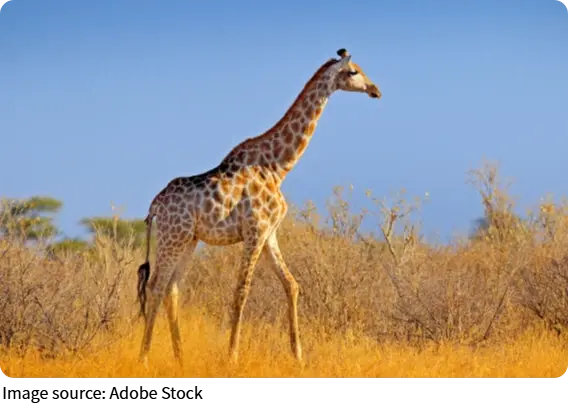
The giraffe’s long neck represents millions of years of successful adaptation, but the species now faces challenges that evolution alone cannot solve. Habitat loss, expanding human activity, and illegal hunting have contributed to significant population declines across parts of Africa.